
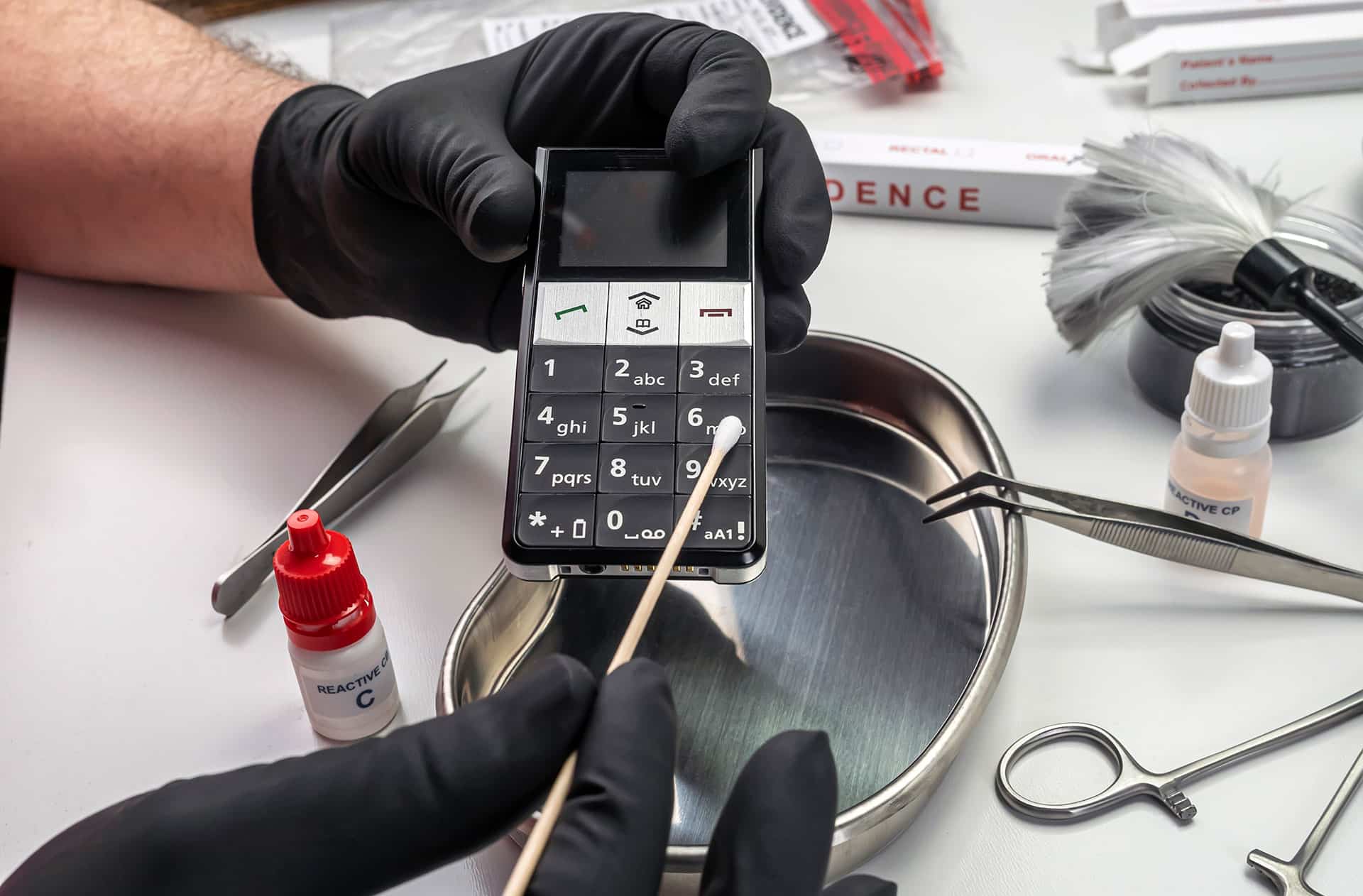
What a cell phone forensic exam can and cannot recover
If your case in Toronto or the GTA hinges on a phone, the first question is usually simple. What can a mobile phone forensics exam actually pull off the device, and what is gone for good? The honest answer is that a proper exam recovers far more than most people expect, including deleted messages, but it cannot recover everything. Any lab that promises otherwise is not being straight with you.
At Data Rescue Labs, we have spent 16+ years and more than 6,000 cases doing this work from our own lab in Mississauga. We are ISFCE certified, our examiners have given expert-witness testimony, and every device we touch stays under a documented chain of custody so the results hold up in an Ontario courtroom. This guide walks through what a cell phone forensic exam can recover, what it cannot, and how we tell the difference before you spend a dollar.
What mobile phone forensics actually is
Mobile phone forensics is the process of extracting, decoding, and preserving data from a phone or tablet in a way that stands up as evidence. It is a branch of digital forensics, and it follows the same rules. Preserve the original, document every step, and work from a verified copy so you never change what is on the device.
That last part matters more than most people realize. Browsing a phone by hand, or letting it reconnect to Wi-Fi, can overwrite deleted data and quietly destroy the very thing you need. Real mobile phone forensics isolates the device first, then works from a forensic image, not the live phone.
What a mobile phone forensics exam can recover
A capable exam reaches well past what is visible on the screen. Depending on the device, its condition, and how quickly it reaches the lab, we can often recover:
- Deleted texts and iMessages. Deleted text message recovery is one of the most common wins, because messages often sit in the phone's database long after they vanish from view.
- Call logs, contacts, and calendar entries, including deleted records.
- Photos and videos, including deleted files and images buried in app caches.
- App data from WhatsApp, Signal, Telegram, and similar apps, where the chat database can sometimes be decoded.
- Location history from GPS, cell tower, and Wi-Fi records that can rebuild a timeline.
- Web history, notes, voicemails, and system logs that show how and when the device was used.
A locked or water-damaged phone is often not a dead end either. Locked phone data extraction depends on the exact model and security patch level, but a device that looks useless on the counter can still hold a full picture inside.
The limits of mobile phone forensics: what it cannot recover
Here is where honesty separates a real lab from a sales pitch. Mobile phone forensics has hard limits, and pretending otherwise wastes your time and money. We usually cannot recover:
- Data that has been fully overwritten. Once the storage a deleted file used gets reused, that data is almost always gone.
- Cloud-only data that never lived on the device, without the account credentials or lawful access to the account.
- Some strong encryption. Certain current apps and some modern, fully updated, locked phones use protection that no tool on the market can guarantee to bypass.
- A physically destroyed memory chip. If the chip itself is shattered, even chip-off cannot read what is not there.
- Content that never existed. Forensics finds what was on the device, not what someone assumes should be.
Smartphone forensics also changes fast. What is recoverable on a three-year-old Android may not be recoverable on this year's flagship, because manufacturers tighten security with every release. That is why we assess your specific device before quoting, instead of promising a result we cannot back up.
How a cell phone forensic exam actually works
A cell phone forensic exam usually works at one of three depths. A logical extraction pulls the data the phone will hand over through normal channels. A file system extraction reaches deeper into app databases and system files. A physical extraction copies the raw storage, which is where most deleted data lives.
We use industry-standard platforms like Cellebrite UFED and XRY, along with Magnet Axiom for analysis. These are the same tools trusted by law enforcement, but a tool is only as strong as the examiner running it. Software does not interpret evidence. A qualified examiner does, and then explains it in a report that can survive cross-examination.
When a phone is too damaged or too locked for a normal extraction, chip-off forensics is sometimes an option. It means physically removing the memory chip and reading it directly. It is a last resort, it does not work on every model, and it does not work at all on many encrypted devices. We only recommend it when the odds justify it.
What makes phone evidence hold up in court
Evidence that is collected sloppily can be thrown out, no matter how damning it looks. That is why our reports document every step, our images are hash-verified, and our examiners can testify to exactly how the data was obtained. Chain of custody is not paperwork for its own sake. It is the reason a judge can trust what you present.
This work has to stay lawful, too. We only examine devices you are legally entitled to examine, such as your own phone, a company-owned device, or a device covered by proper legal representation or a court order. If a matter involves a family dispute or a minor's device, we keep everything above board and route it through the right authorized channel. Our work is trusted by the Toronto Police, the Ministry of the Attorney General, and Rogers, and we intend to keep it that way.
A real GTA example
A small business in the GTA came to us after a departing employee wiped a work phone before handing it back. The company suspected client lists had been forwarded to a competitor, but the phone looked clean. From a forensic image, our examiners recovered deleted message threads that showed what had been sent and when. The report and the examiner's testimony supported the company's case. The employee had assumed a factory reset erased everything. It did not. (Details changed for privacy.)
Why local, court-ready mobile phone forensics matters
Choosing a local lab for mobile phone forensics protects the timeline and the evidence. Your device stays in our Mississauga clean room and never ships out of province, so the chain of custody stays intact and nothing sits in transit where it can be lost or altered. Local also means you can meet the examiner who worked your case and have them appear in an Ontario court if it comes to that.
If you need this done, our mobile device forensics service handles the full process from intake to testimony. For laptops, desktops, or servers tied to the same matter, our computer forensics team works to the same standard. Both follow the practices set by the International Society of Forensic Computer Examiners (ISFCE), which certifies our examiners.
Frequently asked questions
Can you recover deleted text messages from a phone?
Often, yes. Deleted messages frequently stay in the phone's database until that space is overwritten, so deleted text message recovery is one of the more reliable results. The sooner the device reaches us, the better the odds.
Can you get into a locked or passcode-protected phone?
Sometimes. It depends on the model, the operating system version, and the security patch level. We tell you the realistic odds for your exact device before you commit, and the evaluation is free.
Is a phone forensic exam legal?
Yes, when you have the right to examine the device. That means your own device, a company-owned device, or a device covered by legal representation or a court order. We only take on authorized cases.
What does mobile phone forensics cost?
It depends on the device, its condition, and what you need recovered. We give a fixed quote before any work starts, so there are no surprises and nothing proceeds without your approval.
Will the results hold up in an Ontario court?
That is the whole point of forensic-grade work. With a documented chain of custody, hash-verified images, and an examiner who can testify, the results are built to be court-admissible.
Talk to a certified lab before you touch the device
Not sure whether the data you need is recoverable? Start with a free evaluation. We assess the device, tell you honestly what a mobile phone forensics exam can and cannot recover in your case, and give you a fixed quote before any work begins. Nothing proceeds without your approval.
Call our Mississauga lab at 1-416-238-1232 or open a case through our mobile device forensics service. Sixteen years, more than 6,000 cases, and a straight answer every time.