
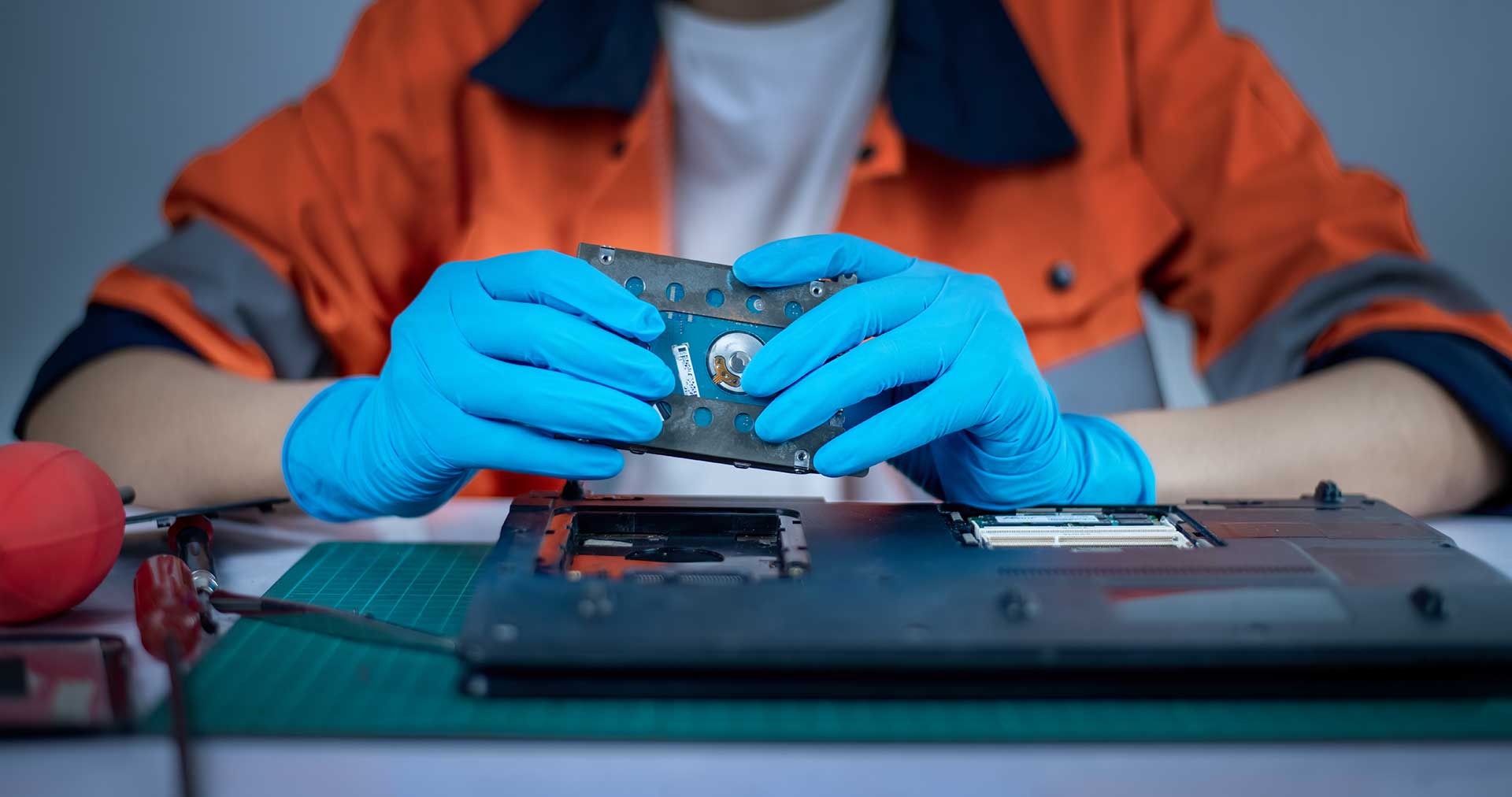
Most people first hear the term "digital forensics" at a stressful moment. A business owner suspects a former employee walked out with client files. A lawyer needs to prove what was on a phone. A family is locked out of a deceased parent's laptop. Someone just realized their device might be tracking them. If that is roughly why you are here, this guide is written for you, not for a cybersecurity team or a textbook.
We run a digital forensics lab in Mississauga, and we get the question "what is digital forensics?" almost every week. Here is the plain version: what it covers, how it differs from simply getting your files back, and how to know whether you actually need it.
Digital forensics is the practice of recovering, preserving, and analyzing data from phones, computers, and storage devices so it holds up as evidence. The process follows strict handling rules, known as chain of custody, that keep the data unaltered and trustworthy, including in court if a dispute ever gets that far.
What is digital forensics, in plain English?
Every digital device keeps records of what happens on it, and a lot of those records survive even after someone tries to delete them. Messages, call logs, photos, documents, browsing history, location data, login times, file edits, deleted files sitting in unallocated space. Digital forensics is the careful work of pulling that information out, proving it has not been altered, and explaining what it shows.
The "forensics" part is the important bit. Anyone with the right tools can copy files off a drive. A forensic examiner does it in a way that can be defended later: documented, repeatable, and tamper-evident. That discipline is what separates a finding you can rely on from one that gets thrown out or disputed.
Digital forensics is a branch of forensic science, and it grew up alongside the devices it examines. It started with desktop computers in the 1980s and now covers phones, tablets, external drives, memory cards, RAID arrays, and just about anything that stores data.
Digital forensics vs. data recovery: what is the difference?
This is the question we get most often, and it matters, because the two jobs look similar but have a different goal.
Data recovery is about the outcome. Your drive failed, your card is corrupted, your phone died, and you want your files back. Nobody cares exactly how the data is retrieved, as long as it comes back intact. Speed and completeness are what count.
Digital forensics is about the evidence. The goal is not just to get the data, but to be able to prove where it came from, that it has not been changed, and what it means. That is why a forensic job moves slower and is documented at every step. A recovered photo is just a photo. A forensically recovered photo comes with a record of exactly how and when it was retrieved, so it can be trusted by a lawyer, an HR department, or a judge.
Here is the simplest way to tell which one you need. If you only want your files, that is data recovery. If the data might end up in a dispute, an investigation, or a courtroom, you want digital forensics from the start, because you usually cannot add the forensic rigor back in after the fact.
The two overlap more than most labs admit. The techniques used to rescue files from a dead hard drive are often the same techniques used to extract evidence. The difference is the paperwork, the handling, and the intent. We do both under one roof, which means if a routine recovery turns out to matter legally, we can treat it as evidence from the start instead of starting over.
How a digital forensics investigation actually works
People imagine the dramatic TV version. The real process is methodical and, frankly, a little boring, which is the point. It usually runs in four stages.
1. Intake and preservation. The moment a device arrives, it gets logged: what it is, its condition, who handed it over, and when. This is the start of the chain of custody. The goal here is to freeze the evidence in its current state so nothing changes, including by accident. Simply turning a phone on can alter data, so examiners handle devices carefully and often isolate them from networks first.
2. Forensic imaging. Instead of working on your original device, an examiner makes a forensic image, a bit-for-bit copy of the entire storage, made with a write-blocker so the original cannot be modified. All the analysis happens on the copy. The original is stored safely and untouched. This is how examiners can dig through a device aggressively without ever putting the evidence at risk.
3. Analysis. This is the part people picture: recovering deleted files, reading message threads, reconstructing timelines, pulling location history, finding what was opened and when. Modern phones and computers leave a surprising number of traces, and a single action can create several records in different places. Good analysis is less about magic tools and more about knowing where to look and how to interpret what is there.
4. Reporting. The findings get written up in a clear report that a non-technical person can follow, with the technical detail to back it up. If the matter goes to court, a certified examiner can testify as an expert witness and explain the findings under questioning.
Every one of these stages is documented. That documentation is what makes the result hold up.
The main types of digital forensics
Digital forensics is a broad field, and different devices need different skills and equipment. The areas we focus on:
- Computer forensics covers desktops, laptops, and servers. File recovery, activity tracing, deleted-data analysis, and timeline reconstruction.
- Mobile device forensics covers phones and tablets. Messages, call logs, app data, photos, and location history, including from locked or damaged devices.
- Forensic drive imaging is the foundational step above: a verified, court-ready copy of a drive that preserves the original.
- Chip-off forensics is a last-resort technique where the memory chip is physically removed and read directly, used when a device is too damaged or locked to access any other way.
- Digital image authentication examines whether a photo is original or has been edited or manipulated.
- Digital estate forensics helps families access data on a deceased relative's locked device, with proper authorization.
It is worth saying what we do not do, because honesty matters more than a longer list. We do not currently offer video or audio forensics. If that is what you need, you are better served by a lab that specializes in it, and we will tell you that rather than stretch a case we are not the right fit for.
Why chain of custody and court admissibility matter
Chain of custody is just a documented record of who handled a piece of evidence, when, and what they did with it. It sounds bureaucratic. It is also the single thing most likely to make or break a case.
Digital evidence is easy to challenge. The other side will ask whether the data could have been altered, planted, or mishandled. If you cannot answer that with a clean, documented trail, even genuine evidence can be dismissed. A solid chain of custody, combined with forensic imaging that proves the original was never modified, is what lets evidence survive that scrutiny.
This matters even if you are sure you will never go to court. Most cases settle, and disputes get resolved, precisely because one side shows up with evidence the other side cannot poke holes in. Doing it properly from the start keeps that option open. Doing it casually can quietly close it.
This is also where certification comes in. Our examiners are certified by the International Society of Forensic Computer Examiners, which is what allows us to testify as expert witnesses and have our methods accepted as sound.
Do you actually need a digital forensics expert?
Not every lost file is a forensics case. Here are the situations where it usually is worth bringing in an expert.
You are a business owner with a suspicion. A departing employee who may have copied client lists, sabotaged files, or used company devices improperly. Forensics can establish what was accessed, copied, or deleted, and document it in a way that holds up for HR, counsel, or litigation.
You are a lawyer or paralegal who needs evidence. Family law, employment disputes, civil litigation, fraud. If a phone or computer holds something relevant to your case, a digital forensic expert witness can extract it properly and testify to it. We work with legal firms across Toronto and the GTA on exactly this.
You are an individual in a personal or family matter. Disputes, suspected dishonesty, or concern about what is on a shared device. The key rule: we only examine a device when you are the legal owner or have proper authorization.
You need to access a deceased loved one's device. A locked phone or laptop holding photos, accounts, or documents the family needs. With the right authorization, this is something we handle regularly and with care.
You think your device is being monitored. If you suspect spyware or stalkerware, a forensic examination can find it and document it.
If your situation is on this list, the safe move is to talk to a lab before touching the device further, because continued use can overwrite the very data you need.
What to look for in a digital forensics lab
Not all labs are equal, and the differences are easy to check before you hand over a device.
Look for certification you can verify, like ISFCE, so the examiner can stand behind the work and testify if needed. Look for a real chain-of-custody process, documented from intake. Ask whether they have an on-site clean room, because physically damaged drives need a controlled environment and shipping a fragile device across the country adds risk. And look for an honest upfront assessment, including whether your case is even a forensics case and what the realistic odds are. A lab that promises guaranteed results on a unique case is telling you what you want to hear, not the truth.
For what it is worth, that is the standard we hold ourselves to: 16+ years of work, 6,000+ cases, a clean room in our Mississauga lab, and a straight answer before you commit to anything.
Frequently asked questions
Is digital forensics the same as data recovery?
No. Data recovery is about getting your files back. Digital forensics is about producing data that can be trusted as evidence, with the documentation and handling to prove it was not altered. The work often overlaps, but the goal and the rigor are different.
Is digital evidence admissible in court?
Yes, when it is handled correctly. Admissibility depends on a clean chain of custody, forensically sound methods, and a qualified examiner who can testify to how the evidence was obtained.
Can you recover deleted files?
Often, yes. Deleting a file usually removes the reference to it, not the data itself, until that space is overwritten. The sooner a device is preserved, the better the odds.
Do I need a police report or a lawyer to use a forensics lab?
No. We work with private individuals as well as legal firms and agencies. You do need to be the legal owner of the device or have proper authorization to have it examined.
Can you examine a device that does not belong to me?
Only with proper authorization. We do not unlock or examine someone else's device on request. The main exception is a device belonging to a deceased family member, handled with the right documentation.
How long does a digital forensics investigation take?
It depends on the device, the damage, and the scope of what you need. We give you an honest timeline upfront and keep you updated, rather than quote a number that sounds good but is not real.
Talk to a real lab before you act
If you are dealing with something that might matter legally, the most useful first step is a short conversation, before the device gets used, wiped, or "fixed" in a way that costs you the evidence.
We are a digital forensics lab based in Mississauga, serving Toronto, the GTA, and clients across Canada. Call us at 1-416-238-1232 or open a new case, and we will tell you honestly what is possible.